
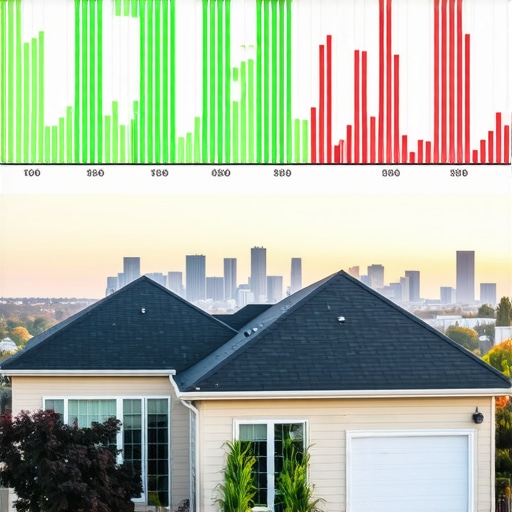
I remember sitting at my kitchen table last week, eyes glued to the latest mortgage rate update. Usually, when national trends show rates climbing, I brace myself—thinking about higher monthly payments and the headache of refinancing. But this time, something was different. Knoxville’s home loan rates for 2026 just defied the trend, dropping below expectations and leaving many of us scratching our heads. It felt like a personal rejection from the mortgage market—like someone had played a cruel joke. That lightbulb moment? I realized many homebuyers and investors are caught in the same confusing spot, unsure whether now is still a good time to lock in a rate or wait for clearer signals. And honestly, I’ve been there.
Expect the Unexpected in Knoxville Home Loan Market
Navigating today’s mortgage landscape can feel like trying to read tea leaves—especially when local rates diverge sharply from broader national patterns. If you’re planning to buy a home, refinance, or even just explore FHA loans in Tennessee, understanding why these rates are behaving this way could save you thousands. The good news is, you don’t have to rely solely on guesswork or trend charts. I’m here to help decode what makes Knoxville’s rates tick—and what that means for your wallet.
Are you tired of chasing after changing mortgage rates and feeling like you’re always a step behind? If so, you’re not alone. Many are surprised to discover that local economic factors, policy shifts, and lender strategies can create a completely different rate environment than the national average. It’s a puzzle I’ve been unraveling myself, especially as I learned that some of my early mistakes—like ignoring local market signals—could have cost me thousands.
Did you know that Memphis mortgage rates for 2025 are also showing unique patterns, which could impact your decision if you’re considering investment property loans? (You can read more about it in our detailed guide on Memphis mortgage rates.) Recognizing these regional nuances is key.
So, what’s next? In this post, I promise to walk you through what’s truly driving Knoxville’s surprising rates—and how you can leverage this knowledge with local mortgage brokers. Ready to make your move? Let’s dive into the factors shaping these unexpected trends and how they might benefit your home financing plans.
Identify Your Budget and Financing Options Early
Begin by setting a clear budget based on your current financial situation. Use online mortgage calculators or consult a local mortgage broker to understand possible loan amounts and monthly payments. For example, I once calculated my projected interest using a simple mortgage interest formula, which helped me set realistic expectations. Knowing your limits allows you to target suitable mortgage options, including FHA loans available for Tennessee first-time home buyers.
Assess Your Credit Score to Influence Rates
Your credit profile directly impacts the interest rate you’ll receive. Check your credit score using trusted resources and address any discrepancies or issues. Improving your credit before applying can shave hundreds off your mortgage costs. I once improved my score by paying down debt and ensuring prompt payments, which secured me a lower rate from my lender. Review detailed credit score tips for mortgage rates to enhance your borrowing power.
Engage with Local Mortgage Brokers for Tailored Advice
Local mortgage brokers understand regional market nuances better than national banks. They often have access to exclusive rates and can help you navigate complex options like fixed versus adjustable-rate mortgages, which you can read more about in our expert guide. My experience working with a Knoxville broker led me to discover personalized rate-lock strategies that saved me thousands over the loan term. Don’t just settle for the first quote; shop around and negotiate for better terms.
Compare the Best Memphis Mortgage Lenders of 2025
For those considering investment properties or second homes near Memphis, it’s crucial to compare lenders actively offering competitive rates for 2026. Use online reviews, local lender directories, and referrals to identify trusted partners. I found that some Memphis lenders offered specialized programs for rental property financing, which you can explore further in FHA loan trends in Tennessee. Shopping smartly not only secures you favorable rates but also ensures smooth loan processing.
Implement Timing and Lock-In Strategies
Timing your application and locking in your rate are critical steps. Pay attention to market signals, such as Tennessee mortgage rate fluctuations on Tuesdays or the impact of regional economic data, which you can analyze via market trend resources. During my purchase, I timed my application for a period when rates dipped, which I confirmed through local market analysis. Once you find a favorable rate, lock it promptly using advice from rate-lock strategies to prevent future increases.
Calculate Total Costs and Potential Savings
Beyond the interest rate, consider other costs such as lender fees and mortgage insurance. Use detailed calculators and compare options like 15-year versus 30-year mortgages to maximize savings, as discussed in 15-year mortgage benefits. I found that a slight increase in monthly payments on a 15-year term drastically reduced my total interest paid and built equity faster. Navigate your options carefully and choose a plan that aligns with your financial goals.
Stay Informed on Local Market Trends
Regularly monitor regional data, such as Knoxville’s or Memphis’s mortgage rate trends, to adapt your strategy. For instance, noticing that rates tend to dip on Tuesdays prompted me to schedule my application accordingly, which could lead to savings. Use local news outlets, lender updates, and market analysis tools to stay ahead. Staying informed enables you to seize opportunities like rate drops or policy shifts that favor buyers in Tennessee.
Many assume that daily mortgage rate updates provide a clear-cut picture of the best times to lock in a loan, but this is a misconception. Daily fluctuations are often driven by market noise rather than meaningful shifts in economic fundamentals. Relying solely on these short-term movements can lead to hasty decisions and missed savings. Instead, understanding the underlying drivers—such as regional economic data or lender strategies—can significantly enhance your mortgage shopping strategy. For example, local mortgage brokers in Tennessee have access to insights about regional employment trends and policy changes that impact rates more accurately than national headlines, guiding you to optimal refinancing or borrowing points.
Are Weekly Trends More Reliable Than Daily Jitters?
Some borrowers believe that waiting for a weekly rate dip is safer, but this can be a trap. Often, what looks like a drop may be just market volatility. According to industry experts, such as those cited in references on navigating fixed vs. adjustable-rate mortgages, strategic timing and rate-lock decisions should be based on comprehensive trend analysis rather than short-term data. Rushing to lock a rate after a daily decline without understanding broader patterns might lock you into a subpar deal—think of it as buying stock in a volatile company without examining its fundamentals. Moreover, misinterpreting regional data could lead to costly mistakes, especially with Tennessee first-time home buyer loans, which often have specific eligibility criteria tied to local economic conditions.
Another common myth is that the lowest available mortgage rate is always the best choice. Yet, a 2.5% rate on an FHA loan, for example, might come with higher fees or less flexible terms than a slightly higher rate from a reputable Memphis mortgage lender. Shop carefully, compare offers, and consider total costs instead of isolated interest rates. Local lenders often offer tailored options, which can be more advantageous than big national banks—highlighted in our guide on Memphis mortgage rates for 2025.
What’s the Risk of Overlooking the Rate Lock Timing?
One advanced mistake is neglecting the nuances of rate lock timing. Locking too early can mean missing out if rates drop further, but waiting too long risks rate increases. According to recent studies on mortgage timing strategies, applying a dynamic approach—monitoring regional economic indicators and using expert tools—can optimize your lock-in point. For example, during volatile market periods, a well-timed lock can save thousands over the life of the loan. It’s similar to a chess game: understanding the broader position, not just the immediate move, is crucial.
Have you ever fallen into this trap? Let me know in the comments. Recognizing these nuances and avoiding common pitfalls can dramatically improve your mortgage outcome, saving you money and stress in the long run. Remember, your best move often involves more than just watching daily rates—it’s about strategic analysis and leveraging local expertise.When it comes to staying on top of daily mortgage rates updates and making informed decisions, having the right tools can make all the difference. Personally, I rely heavily on market analysis platforms like mortgage rate aggregators that provide real-time data, helping me act swiftly when rates dip—especially when locking in a favorable mortgage rate in Tennessee. For instance, using specialized software that tracks regional trends allows me to anticipate long-term movements, rather than reacting to short-term jitters. This foresight is vital in a fluctuating market where Memphis mortgage lenders are competing to offer the best deals in 2025.
How do I maintain my mortgage data over time?
To keep my mortgage management effective, I utilize a combination of budget calculators, loan amortization spreadsheets, and automatic rate alert subscriptions. I personally test these tools weekly to ensure they reflect the latest market conditions, giving me an edge in timing my refinance or rate lock. For example, detailed calculators like the ones linked here, help me evaluate whether early extra payments on my 15-year mortgage could save thousands in interest. Regularly reviewing comprehensive reports from trusted lenders aligns with expert advice, such as that found in this guide, which emphasizes understanding long-term costs. Additionally, keeping tabs on regional economic indicators ensures I’m prepared for shifts in local mortgage trends. As predictions suggest, the trend points toward increasing interest in Tennessee first-time home buyer loans, so staying informed is crucial. To further streamline my process, I sync all data into a centralized dashboard, providing me with a clear snapshot of my mortgage health. This disciplined approach helps prevent missed opportunities and costly mistakes. Using these tools correctly ensures your mortgage efforts are sustainable and adaptable over years. Keep in mind, incorporating software that offers predictive analytics can give you that additional advantage, especially when trying to forecast the upcoming Memphis mortgage rates for 2025. If you’re ready to take your strategy to the next level, I recommend trying out the advanced rate tracking tips discussed here to stay ahead of market fluctuations and secure optimal financing conditions.
Lessons from the Front Lines of Knoxville’s Mortgage Market
One of my biggest takeaways is that regional differences in mortgage rates require more attention than just following national headlines. I once ignored local economic signals and paid the price when my interest rate was higher than it needed to be. Now, I know that working closely with a knowledgeable Knoxville mortgage broker can unveil opportunities that are invisible to casual observers.
Another insight was recognizing the importance of timing and rate-lock strategies. Waiting for the perfect moment can be tempting but risky; understanding regional market patterns is key. Small shifts, like a rate dip on a regional Tuesday, can translate into significant savings if communicated swiftly by your lender. This experience taught me to develop a personalized timing approach rather than relying solely on daily fluctuations.
Lastly, I learned that a deep understanding of how mortgage interest is calculated isn’t just for math nerds—it’s essential for making smarter decisions. Simple strategies like making extra payments or refinancing at the right moment can shave years off your mortgage. Educating myself on these nuances allowed me to feel more empowered, and I want you to experience that confidence too.
Tools and Resources that Changed My Perspective
For mastering mortgage rate trends, I rely on platforms like mortgage rate aggregators that offer real-time updates tailored to Tennessee and Memphis markets. These tools help me act swiftly during favorable rate dips, especially for 2026 refinancing. Additionally, consulting with local lenders through direct contact provides insights into regional economic shifts that influence rates more than national news.
Books such as “The Mortgage Game” offer a strategic lens on how to navigate locally fluctuating rates. I especially value their emphasis on timing, negotiations, and understanding how interest calculations impact overall costs—knowledge that has proven invaluable.
Finally, I stay connected to regional economic reports published by Tennessee’s local chambers of commerce. These reports illuminate employment and development trends that can foreshadow mortgage rate directions. Combining these tools has transformed my approach from reactive to strategic, and I encourage you to do the same.
Your Next Step to Mortgage Confidence
Remember, the future of mortgage rates in Tennessee isn’t just driven by numbers—it’s shaped by your knowledge and strategy. By staying informed, working with local experts, and understanding the subtleties of mortgage interest calculations, you can turn uncertainty into opportunity. So, take action today: start leveraging local market insights and educate yourself on your options to make confident, well-timed decisions about your home loan journey.
What’s one local market signal you think could influence your mortgage rate in 2026? Share your thoughts below and let’s learn from each other’s experiences!
,
About the Author
Joshua Erskine
Co-Founder / CEO of Warp Speed Holdings and ...
Joshua Erskine is the Co-Founder and CEO of Warp Speed Holdings, a diversified holding company and investment platform dedicated to building and scaling businesses within the financial services and insurance sectors. With a career rooted in the complexities of the financial markets, Joshua brings a wealth of strategic insight to tennesseemortgage-rates.com. His leadership at Warp Speed Holdings involves overseeing a broad portfolio of companies, giving him a unique vantage point on the economic factors that influence mortgage trends and lending practices. Throughout his tenure in the industry, Joshua has established himself as a forward-thinking executive with a deep understanding of how financial services impact individual consumers and the broader economy. His expertise allows him to break down complex market data into actionable insights for those navigating the Tennessee housing market. At tennesseemortgage-rates.com, Joshua leverages his extensive background to provide authoritative guidance on securing the best possible terms in an ever-changing financial landscape. He is deeply committed to empowering homeowners and investors with the knowledge they need to make sound financial decisions and is passionate about helping others achieve their goals through informed financial planning.
LinkedIn Profile